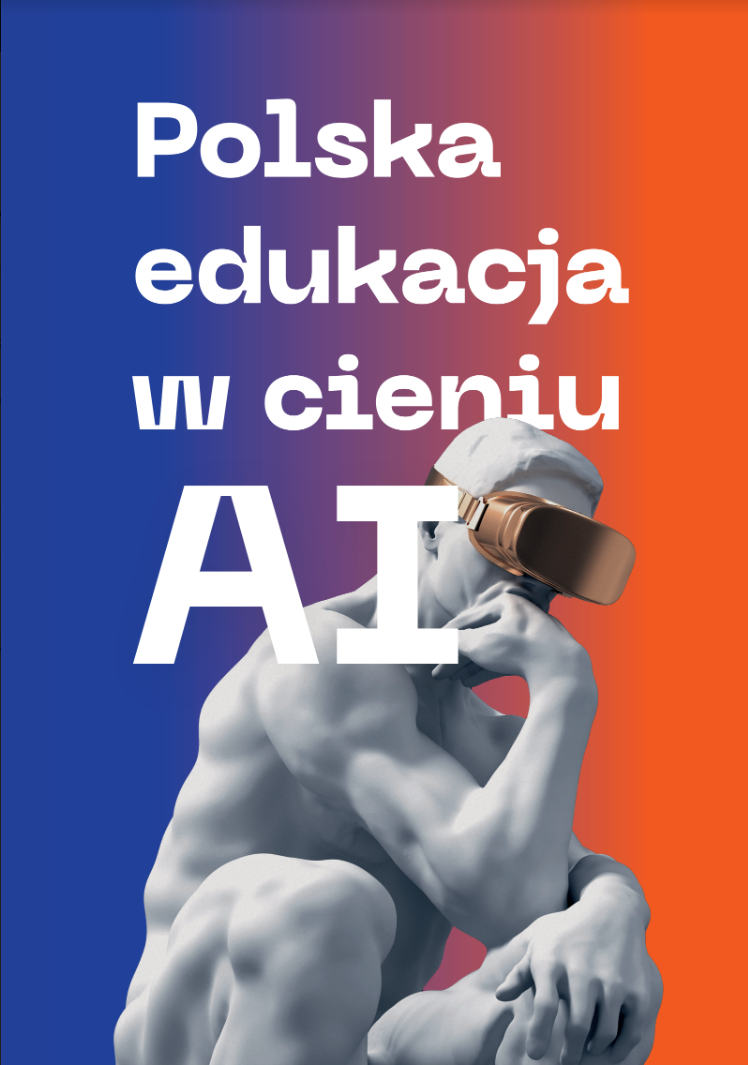
Report edited by Klaudia Bączyk-Lesiuk, Krzysztof Patkowski and Marek Zieliński from Collegium Da Vinci is now available for free download from the CDV website!
The extensive research report “Polish education in the shadow of AI” prepared by Collegium Da Vinci in cooperation with experts sheds light on the dynamic relationship between the growing influence of artificial intelligence and the Polish educational system.
It showcases how AI can change the way we teach and learn, bringing innovation and personalization to the educational process. It highlights what steps need to be taken to ensure that students and teachers are ready for the upcoming changes and how Poland can navigate these transformative times to ensure future generations have the right skills and knowledge.
This report is an essential resource for anyone interested in the future of education in the digital age.
⟨ You will learn from the report ⟩
- What are the main challenges facing the Polish education system in the context of the growing role of artificial intelligence.
- What competencies will be most desirable in the future labor market dominated by AI technologies.
- What are the potential threats related to the development and implementation of artificial intelligence in society.
- How artificial intelligence can affect equal access to education and educational resources.
- What are the best practices in the use of AI in education and work that can be applied in Poland.
- How artificial intelligence can contribute to personalizing teaching and adapting it to the individual needs of learners.
- What are the main recommendations for universities, teachers and politicians in adapting education to the requirements of the future.
- How universities and schools can support the development of skills necessary to work with AI.
The report is based on a quantitative survey conducted using the CAWI method in April 2023, covering 2,379 respondents. SPSS, MAXQDA and MIDJOURNEY data analysis tools were used. The study aimed to identify the scale of AI use in education and assess it from the perspective of students, teachers, students, academic lecturers and business representatives.
Additionally, attitudes towards AI tools, the impact of AI on the labor market and concerns related to its development were determined. The survey was organized into thematic blocks regarding various aspects of AI, using closed and open questions based on a Likert scale. Conclusions also come from conversations with experts and the “POZNAI” conference. Respondents were divided into groups according to their role in education (learners, people teaching others) and level of education (secondary schools, higher education), which allowed for a detailed analysis of their answers.
2379 people took part in the research